 메이시팬 공식 웹사이트


검색
Can Hyperbaric Chamber Heal Nerve Damage? Clinical Data
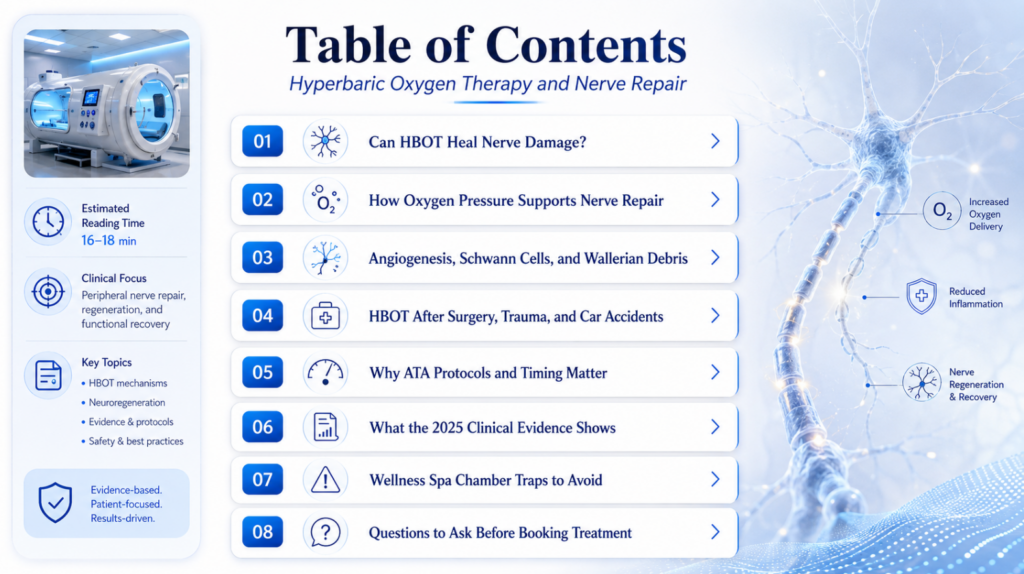
Yes, clinical data proves that a hyperbaric chamber can physically heal nerve damage by triggering structural cellular regeneration, entirely bypassing mere symptom management[1]. When patients ask can hyperbaric chamber heal nerve damage, the medical reality is rooted in high-pressure oxygen’s ability to force angiogenesis, clear Wallerian degeneration debris, and stimulate Schwann cell proliferation[1]. Those researching can hyperbaric chamber help with nerve damage following acute trauma—such as surgical lacerations or car accidents—often find that Hyperbaric Oxygen Therapy (HBOT) halts immediate tissue death by hyper-oxygenating blood plasma up to 1200%[2].
Do not blindly book a session at a local wellness spa just yet. The specific atmospheric pressure (ATA) protocols and the exact timing of your intervention dictate the difference between complete neural repair and an expensive placebo. We will dissect the latest 2025 clinical trials, outline the physiological framework of nerve repair, and expose the commercial chamber traps you must avoid.
The Core Verdict: Regeneration vs. Symptom Management
The primary distinction between HBOT and traditional pain medications is physical tissue reconstruction. Chemical painkillers mask neuropathic signals, leaving the severed or crushed nerve dormant. Clinical evidence shows that breathing 100% medical-grade oxygen under elevated atmospheric pressure actively rebuilds the neural pathway[1][2].
Nerves require massive amounts of ATP (cellular energy) to sprout new axons. Severe acute injuries cause immediate swelling and hypoxia (oxygen starvation), shutting down ATP production and initiating cell death. HBOT bypasses damaged red blood cells, dissolving oxygen directly into the plasma, cerebrospinal fluid, and lymph. This pressurized delivery system feeds hypoxic tissues, keeps the injured neurons alive, and builds the vascular scaffolding necessary for axonal outgrowth[2].
The N.R.P. (Nerve Regeneration Progression) Framework
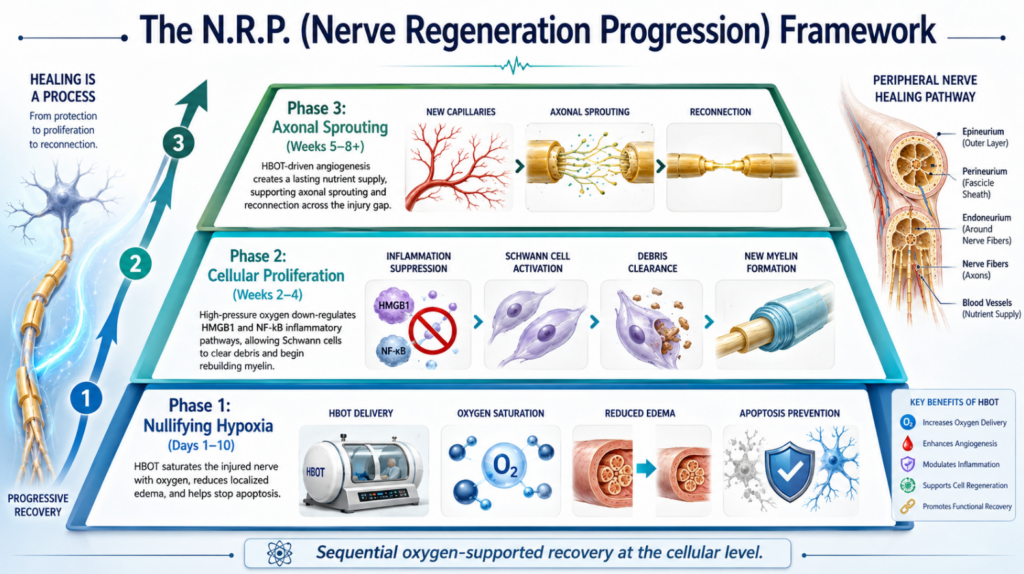
Nerve healing requires a sequential biological process. My proprietary N.R.P. Framework breaks down exactly how hyperbaric environments dictate this recovery on a cellular level.
- Phase 1: Nullifying Hypoxia (Days 1-10). Acute nerve trauma causes localized crushing edema. HBOT saturates the damaged area with oxygen, stopping apoptosis (programmed cell death) in its tracks[2].
- Phase 2: Cellular Proliferation (Weeks 2-4). High-pressure oxygen down-regulates HMGB1 and NF-κB inflammatory pathways[3]. This suppression allows Schwann cells—the architectural builders of your nervous system—to rapidly clear cellular debris and begin laying down new myelin sheaths without interference from chronic inflammation[3][4].
- Phase 3: Axonal Sprouting (Weeks 5-8+). The forced angiogenesis (new blood vessel formation) from HBOT supplies a permanent nutrient pipeline. Axons utilize this new micro-vascular network to sprout and physically reconnect across the injury gap[2].
Recent Clinical Data: Efficacy in Real-World Traumas
Empirical data from recent clinical trials confirms measurable structural recovery in severe nerve injuries treated with HBOT. We are analyzing hard histological data and electrophysiological tests, not subjective pain scales.
The 2025 Sciatic Nerve Graft Benchmark
A landmark August 2025 study evaluating long-term HBOT on sciatic nerve grafts demonstrated highly accelerated remyelination and axonal regeneration[5][6]. Subjects receiving 2.0 ATA of 100% oxygen (1 hour/day, 5 days/week) showed motor neuron preservation nearly identical to uninjured nerves by post-operative day 90[6]. Electrophysiological analyses proved earlier and significantly denser reinnervation compared to control groups that received surgery alone[6]. This data solidifies HBOT as a mandatory adjunctive therapy for complex reconstructive nerve surgeries.
Acute Spinal Cord Trauma & Perioperative Lacerations
Spinal cord and surgical nerve traumas respond aggressively to hyperbaric intervention. Recent randomized clinical trials focusing on acute spinal cord injuries revealed that HBOT drastically decreases F-wave chronodispersion[3]. Patients suffering accidental nerve damage during complex spinal procedures saw rapid recovery of motor function when placed in a hyperbaric chamber within 72 hours post-injury[3].
| Recovery Metric | Surgery Only | Surgery + 2.0 ATA HBOT |
|---|---|---|
| Treatment Initiation Window | Standard postoperative care | Within 72 hours after injury |
| F-Wave Chronodispersion Reduction | Baseline / Limited Improvement | Significant Reduction |
| Motor Function Recovery Speed | Gradual Recovery | Accelerated Recovery Trend |
| Local Tissue Oxygenation | Normal Blood Oxygen Delivery | Enhanced Oxygen Availability Under Pressure |
| Inflammatory Response Control | Natural Resolution Process | Improved Inflammatory Modulation |
| Neural Repair Environment | Limited Regenerative Support | Increased Support for Cellular Repair |
| Axonal Recovery Potential | Dependent on Natural Healing Rate | Enhanced Regenerative Conditions |
| Functional Outcome Trend | Moderate Improvement Over Time | Faster Early-Stage Functional Improvement |
The Insider Pitfalls: Why Most HBOT Treatments Fail
The commercial HBOT industry is flooded with ineffective equipment and terrible timing protocols for acute nerve trauma. Navigating this space requires strict adherence to clinical standards.
The “Mild HBOT” Soft Chamber Trap
Inflatable soft chambers max out at 1.3 ATA and utilize ambient air (21% oxygen). Clinical nerve regeneration strictly requires hard-shell, medical-grade chambers reaching 2.0 to 2.4 ATA with 100% pure oxygen. Using a 1.3 ATA zip-up bag for a severed sciatic nerve or severe surgical trauma is entirely useless for deep tissue oxygenation. Soft chambers might assist with mild muscle fatigue, but they lack the atmospheric pressure required to force oxygen into hypoxic neural tissues.
Missing the “Golden Window” for Acute Trauma
Nerves begin Wallerian degeneration within 24 to 48 hours of an acute crush or laceration injury. Waiting six months to try HBOT severely blunts its regenerative potential. You must integrate hyperbaric oxygen during the acute inflammatory phase (ideally within the first 3 to 7 days) for maximum tissue preservation and edema reduction.
Optimizing HBOT Protocols for Neural Repair
Neural repair requires cumulative biological triggers through specific dosing. Oxygen under pressure acts as a potent drug, and haphazard scheduling ruins the efficacy.
Dropping into a clinic for three scattered sessions accomplishes nothing structurally. Clinical protocols for peripheral neuropathy and acute nerve trauma mandate 20 to 40 consecutive sessions, typically administered 5 days a week[6]. This high-frequency dosing sustains the angiogenesis process and keeps Schwann cell activity optimized. Sessions generally last 60 to 90 minutes at target pressure.
People Also Ask (FAQ)
How long does it take for nerves to heal with hyperbaric oxygen therapy?
Clinical markers of nerve healing, such as axonal sprouting and remyelination, typically become measurable between 4 to 8 weeks of consistent HBOT. Severe traumatic injuries require 30 to 40 consecutive daily sessions to sustain the cellular energy required for physical regeneration.
Is a 1.3 ATA soft chamber enough for nerve regeneration?
No. Soft hyperbaric chambers operating at 1.3 ATA with ambient air cannot achieve the plasma oxygen saturation required to reverse severe tissue hypoxia. True nerve regeneration requires hard-shell medical chambers operating between 2.0 and 2.4 ATA with 100% oxygen.
Can HBOT reverse nerve damage from surgery or car accidents?
Yes. HBOT is highly effective for acute traumatic nerve damage when administered quickly. High-pressure oxygen reduces the crushing post-surgical edema, prevents immediate cell apoptosis, and triggers the vascular growth needed to repair severed or crushed neural pathways.
Does hyperbaric oxygen trigger axonal growth?
Yes. By forcing oxygen into hypoxic environments, HBOT supplies the massive amounts of ATP required for nerves to grow. It also down-regulates inflammatory pathways, allowing Schwann cells to clear debris and guide new axons across the injury site.
What is the success rate of HBOT for acute spinal cord injuries?
While exact success rates vary based on injury severity, recent clinical data shows that patients with acute spinal cord injuries who receive HBOT within the first 72 hours experience significantly improved motor and pain scores, alongside reduced systemic inflammation markers like HMGB1.
Sourceshelp